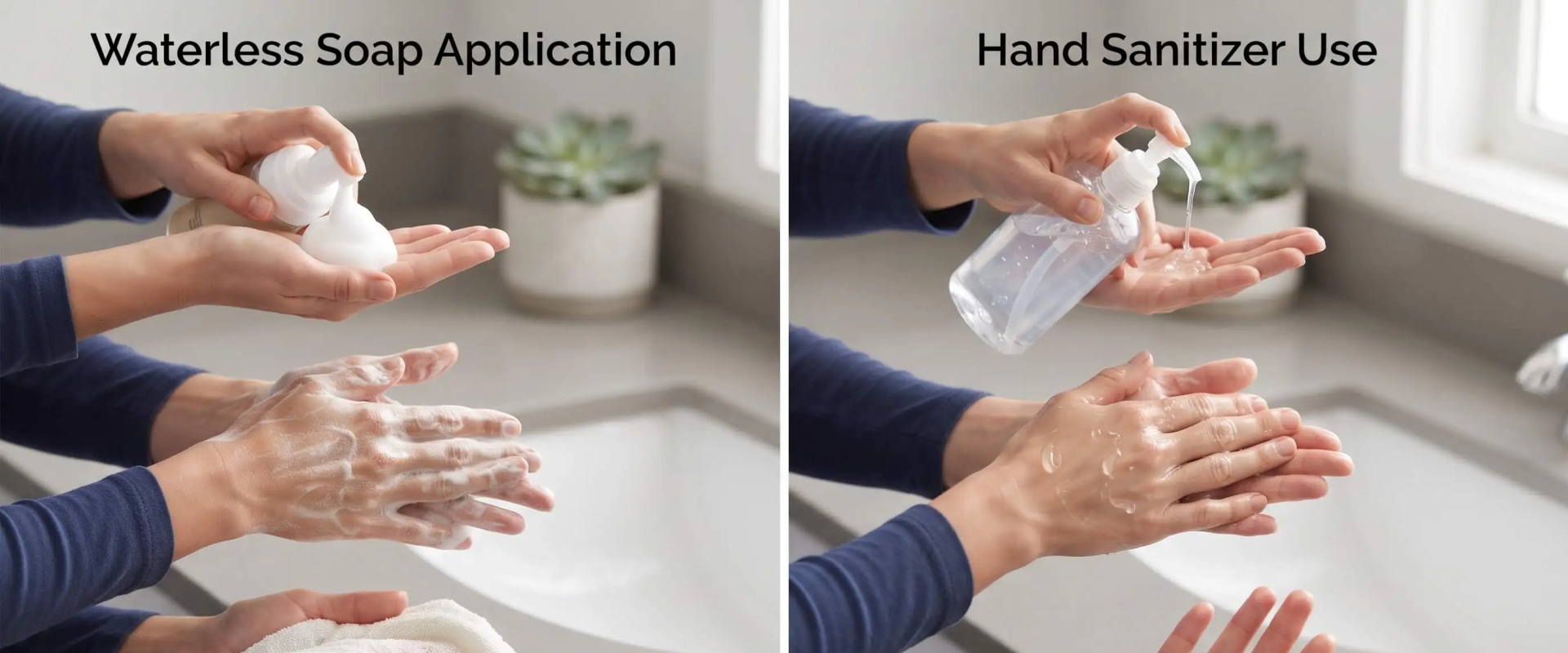
But what that product does on the skin matters more than most people think. Here's the short version of waterless soap vs hand sanitizer: waterless soap physically lifts germs, dirt, and oil off your hands. Alcohol sanitizer chemically deactivates many germs and leaves them, along with the grime, right where they were.
One removes. One deactivates. That single difference shapes how clean your hands really are and how your skin feels after the tenth use of the day.
Below, we walk through each product step by step, from the first drop to the last trace on your skin. Then you can choose the right one for the moment you're in.
TL;DR Quick Answers
Waterless soap vs hand sanitizer
Waterless soap removes germs. Hand sanitizer deactivates them and leaves them on your skin.
How it works: Waterless soap binds to germs, dirt, and oil, and you brush them off (apply, rub, brush off). Sanitizer uses alcohol to break down many germs where they sit.
Dirt and grime: Waterless soap lifts it away. Sanitizer isn't effective on visibly dirty hands.
What's left on skin: After waterless soap, nothing needs rinsing. After sanitizer, you're left with deactivated germs, dirt, oil, and a gel film.
Skin comfort: Alcohol-free waterless soap skips the alcohol that strips skin lipids with frequent use.
Kids: Alcohol-free formulas avoid the ingestion risk that sanitizer gels carry.
Best use: Waterless soap for on-the-go or dirty hands without a sink. Sanitizer for clean-looking hands that need a quick germ kill. Soap and water whenever a sink is available.
Top Takeaways
Waterless soap removes germs, dirt, and oil. Hand sanitizer deactivates many germs and leaves them on your skin.
Sanitizer doesn't work well on visibly dirty hands, and it has limits against viruses like norovirus.
Frequent alcohol use can strip skin lipids and contribute to dryness and hand dermatitis.
Waterless soap follows a simple apply, rub, brush-off sequence with no rinse and no alcohol film.
Soap and water stays the gold standard. Waterless soap is the best option when there's no sink.
Removing vs. Deactivating: The Quick Answer
Waterless soap is a removal tool. Hand sanitizer is a deactivation tool. Both target pathogens, the bacteria, viruses, and fungi that can cause disease. They just deal with them in very different ways.
The CDC puts it plainly: soap and water remove all types of germs from hands, while sanitizer kills certain germs on the skin. Waterless soap brings that removal logic to places where there's no sink.
First, What's Actually on Your Hands?
Your skin's outer layer, the stratum corneum, works like a brick wall. Flattened skin cells are the bricks. Natural lipids are the mortar that holds water in and keeps irritants out.
Germs rarely sit on bare skin alone. They cling to oil, sweat, food residue, and dirt. That's why hands that look clean and hands that are visibly grimy need different approaches. Public health guidance is clear on one point: alcohol sanitizer is not effective when dirt, food, or other organic matter is visible on your hands. Organic, non-toxic hand soap offers an alternative for removing dirt and residue rather than simply sanitizing the skin.
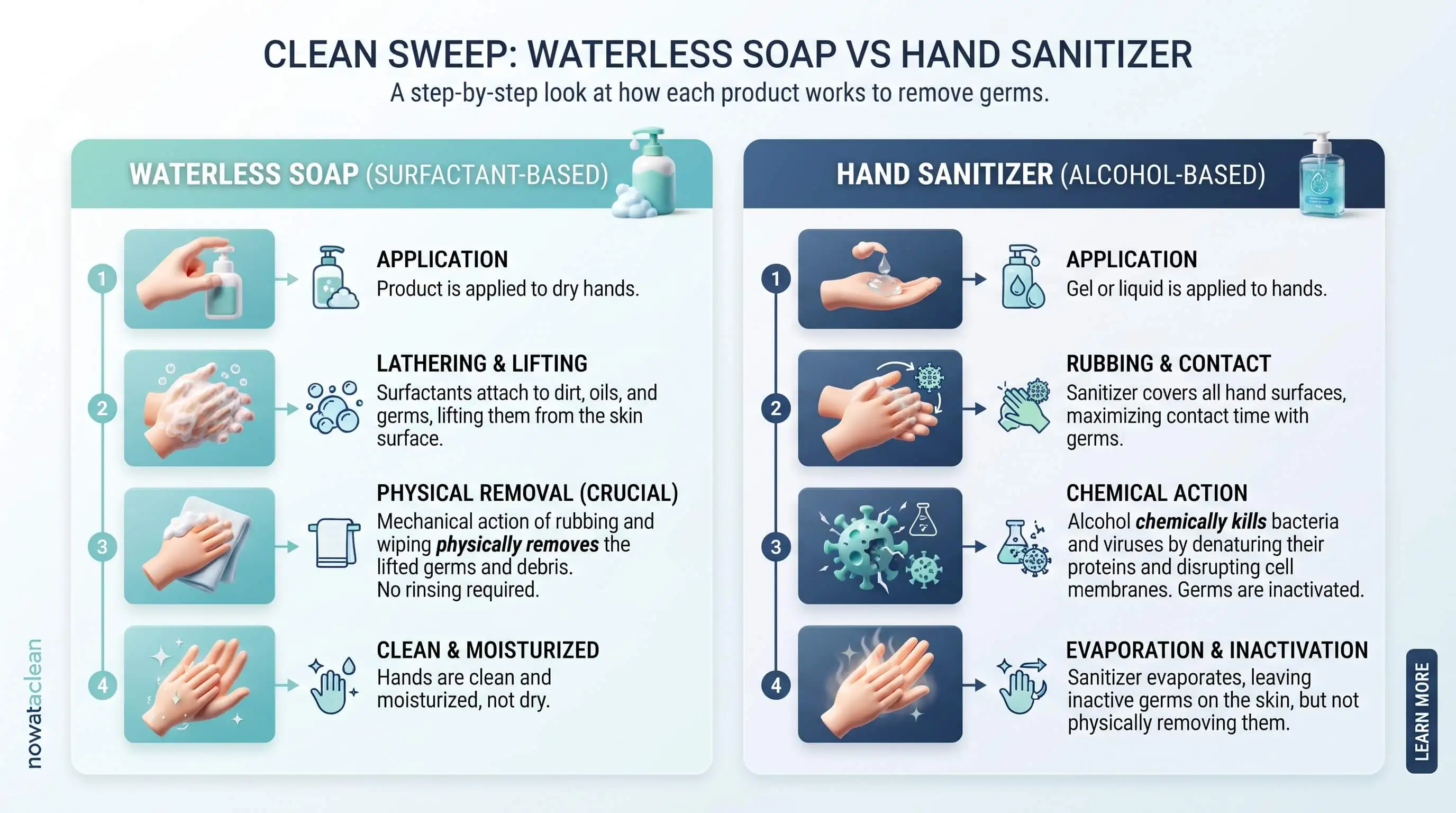
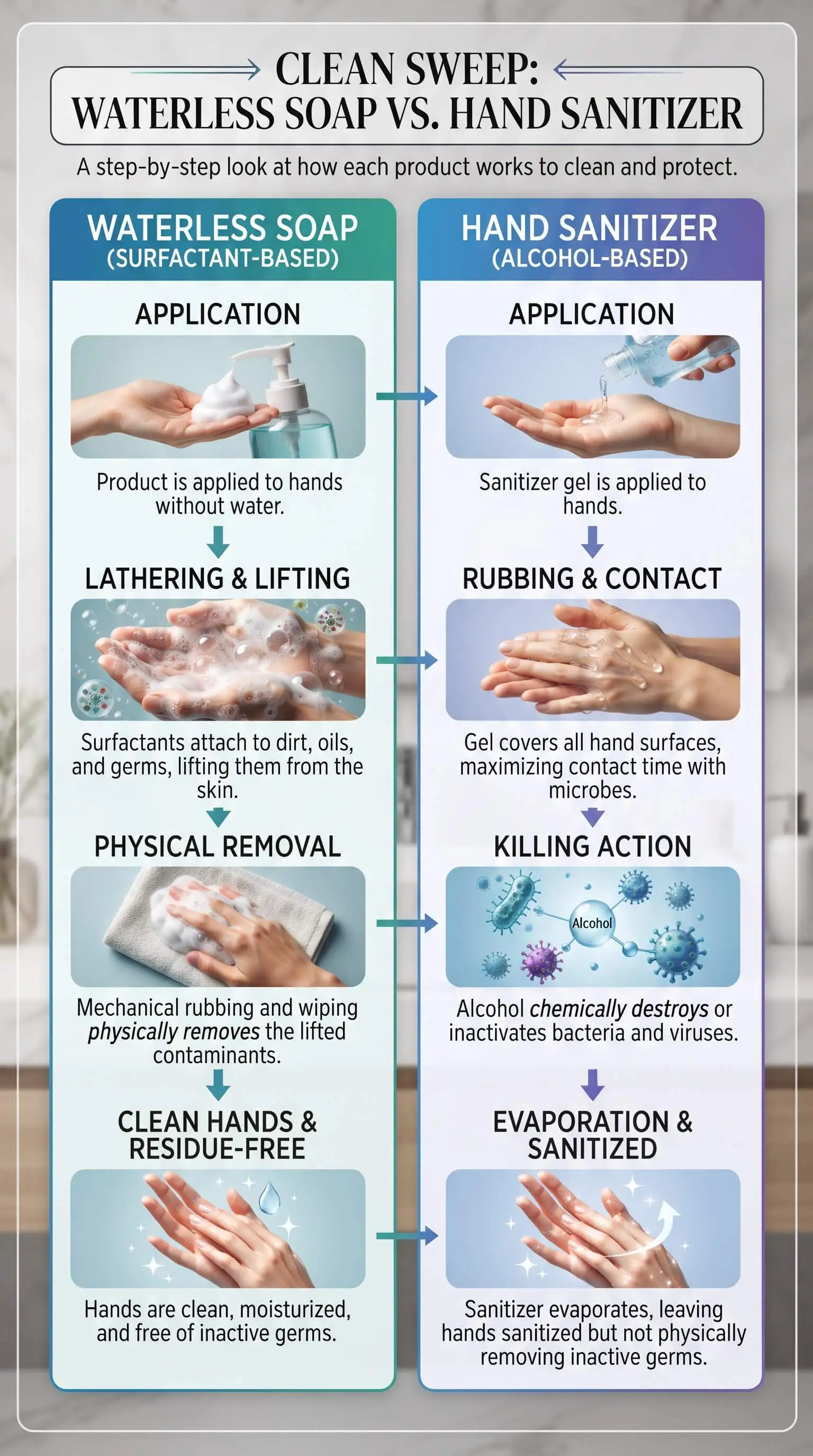
How Hand Sanitizer Works, Step by Step
Apply. You squeeze out a dime-sized amount. The CDC recommends a formula with at least 60% alcohol.
Rub. As you spread it over every surface, the alcohol breaks down the outer membranes and proteins of many germs. Enveloped viruses and many bacteria are deactivated quickly.
Evaporate. The alcohol flashes off in about 20 to 30 seconds. On the way out, it also dissolves some of the lipids in your skin's "mortar."
What's left behind. Deactivated germs, dirt, oil, and gel residue stay on your skin. Nothing was lifted away.
There are known limits. Sanitizer struggles with some non-enveloped viruses, such as norovirus, and it can't cut through grime. It's fast and useful. It just isn't a cleaning step, which is why a hand sanitizer alternative is worth considering.
How Waterless Soap Works, Step by Step
Apply. A small amount of a rinse-free formula goes into your palm. NOWATA's version is plant-based and alcohol-free.
Rub. As you work it across your hands, the formula binds to dirt, oil, and germs.
Brush off. The mixture forms small clumps that carry those contaminants with them. You brush them away. Apply, rub, brush off.
What's left behind. No rinse. No alcohol film. No sticky gel. The contaminants left with the clumps.
In independent Swiss lab testing using a modified ASTM E1174 protocol, NOWATA reports over 99.9% physical removal of a norovirus surrogate and E. coli from skin. That result describes hand cleansing performance. It is not a claim about preventing illness.
Side-by-Side: Waterless Soap vs Hand Sanitizer on Skin
Core mechanism: Waterless soap physically removes germs. Hand sanitizer deactivates them chemically.
Dirt and oil: Waterless soap lifts them off with the clumps. Sanitizer leaves them on the skin.
Germs after use: With waterless soap, they're gone from the hand. With sanitizer, many are deactivated but still on the hand.
Residue: Waterless soap leaves nothing to rinse. Sanitizer leaves a gel film plus deactivated germs.
Alcohol: The NOWATA formula has none. The CDC recommends 60% or more for sanitizer.
Effect on skin lipids: Waterless soap doesn't strip skin with alcohol. Sanitizer's alcohol dissolves some surface lipids.
Water needed: Neither needs water.
Best moments: Waterless soap suits sticky, dirty, or on-the-go hands, sensitive skin, and kids. Sanitizer suits hands that look clean and need a quick germ kill.
If germ removal is your main question, NOWATA breaks down the lab data in its full guide to waterless soap vs hand sanitizer.
What Repeated Use Does to Your Skin Barrier
One pump of sanitizer won't wreck your skin. Twenty a day might.
Researchers already know that frequent handwashing and sanitizer use can cause hand dermatitis. The likely route is a slow loss of lipids and natural moisturizing factor from the stratum corneum. When that happens, the barrier gets leakier, skin loses more water, and cracks give irritants a way in.
To be fair, the World Health Organization notes that alcohol rubs are often better tolerated than harsh detergent washing. Ethanol also tends to be gentler than isopropanol. The problem isn't the sanitizer itself. It's frequency, plus the fact that sanitizer never lifts the grime that keeps you reaching for it.
The people who feel this most:
Parents cleaning small hands all day
Healthcare and food workers
Anyone with eczema or naturally dry skin
When to Reach for Which
Soap and water: After the bathroom, before preparing food, and any time hands are heavily soiled or greasy. This is still the gold standard.
Waterless soap: In the car, after the playground, between errands, on hikes, and whenever skin is too irritated for another round of alcohol.
Hand sanitizer: When hands look clean and you need a quick germ kill, such as after touching shared surfaces in a clinic.
"When we started developing waterless soap, we kept coming back to one question: where do the germs go? With sanitizer, the answer is nowhere. They stay on your hands, along with the dirt and oil they were stuck to. In our own homes, with kids who touch everything, that never sat right. We wanted something that takes the mess off the skin instead of sealing it in under a layer of alcohol. After years of lab work and real-life testing on our own families, the pattern we see is consistent. Hands that get cleaned by removal, not deactivation, stay more comfortable through the day, especially for kids and anyone with dry or sensitive skin. Sanitizer has its place. It just shouldn't be the only tool in the bag."
7 Essential Resources
CDC: Hand Sanitizer Guidelines and Recommendations. This is the baseline: use 60% alcohol or more, and know why soap removes while sanitizer kills.
CDC: Handwashing Facts. The numbers behind why physical cleaning matters for families.
Minnesota Department of Health: How It Works, Cleaning Hands with Hand Sanitizer. A clear four-step breakdown, including why visible dirt cancels out sanitizer.
WHO Guidelines on Hand Hygiene in Health Care (NCBI Bookshelf). The deep dive on how hand hygiene products affect skin proteins and lipids.
ClinicalTrials.gov: Hand Sanitizer Effects on the Skin Barrier. A study design focused on what washing and sanitizing do to your skin's barrier.
Texas DSHS Health Advisory: Hand Sanitizer and Disinfectant Chemical Exposure. Essential reading for parents on sanitizer ingestion risk.
Contact Dermatitis via PMC: Onset of Occupational Hand Eczema Among Healthcare Workers. Real-world evidence on what intensive hand hygiene does to skin.
3 Statistics
23% to 40% fewer cases of diarrheal illness. Handwashing education in the community cuts diarrheal illness by 23% to 40% and respiratory illnesses such as colds by 16% to 21%. (CDC)
A 64% jump in sanitizer ingestion calls. Between March and April 2020, the Texas Poison Center Network saw a 64% year-over-year rise in calls about accidental hand sanitizer ingestion, and 69% of those calls involved children under 5. (Texas DSHS)
90.4% reported hand dermatitis symptoms. In a 2020 study of healthcare workers under intensified hand hygiene rules, 90.4% reported symptoms of acute hand dermatitis. (Contact Dermatitis via PMC)
Just as regular duct cleaning helps maintain a cleaner home environment, proper hand hygiene and gentle, alcohol-free hand soap can support everyday cleanliness while addressing concerns about sanitizer ingestion and skin irritation.
Final Thoughts and Opinion
Here's our take. Hand sanitizer isn't the villain. It's a fast, useful tool for hands that already look clean. But it was never designed to clean. It deactivates germs and then leaves everything else behind: the dirt, the oil, the residue, and the germs themselves.
Waterless soap fills the gap between the sink and the sanitizer bottle. It does what soap is supposed to do, which is take things off your skin, without the water. For sticky kids, long commutes, trailheads, and skin that's tired of alcohol, that difference is real.
Our recommendation is simple. Wash with soap and water when you can. Reach for waterless, no rinse hand soap when you can't. Save sanitizer for the moments when a quick germ kill on clean-looking hands is all you need.
Frequently Asked Questions
Is waterless soap the same as hand sanitizer?
No. Hand sanitizer uses alcohol to deactivate germs chemically, and those germs stay on your skin with any dirt or oil. Waterless soap is designed to physically lift germs, dirt, and oil away. With NOWATA, you apply, rub, and brush off, with no rinse and no alcohol.
Does hand sanitizer remove dirt and germs from your hands?
Hand sanitizer doesn't remove dirt. It deactivates many germs, but public health guidance says it isn't effective when dirt, food, or other organic matter is visible on the hands. For grimy hands, use soap and water or a rinse-free soap that physically removes contaminants.
Which is gentler on dry or sensitive skin?
Alcohol-free waterless soap is usually the gentler pick for frequent use. Alcohol can dissolve some of the lipids in your skin's outer layer. With repeated use throughout the day, that can mean dryness, irritation, and a weaker skin barrier, especially for people with eczema.
Can waterless soap replace washing with soap and water?
Not completely. Soap and water is still best after using the bathroom, before preparing food, and when hands are heavily soiled. Waterless soap is for every other moment: the car, the trail, the stroller, and anywhere a sink isn't practical.
Is waterless soap safe for kids?
A plant-based, alcohol-free waterless soap avoids the alcohol ingestion risk that comes with sanitizer gels. NOWATA was tested on the founders' own children first. As with any personal care product, supervise young kids and keep the bottle out of reach.
Ready for Hands That Are Actually Clean?
You don't need a sink to get germs, dirt, and oil off your skin. Just apply, rub, and brush off. Keep a bottle of NOWATA waterless soap in the car, the diaper bag, or your pack, and give your skin a break from alcohol. Explore NOWATA at nowataclean.com.


